
Enroll Now
Restaurant operations manager reviewing scheduling data in a modern kitchen setting
Four Half-Day Sessions

Leaner Operations.
Same Great Team.

A focused training program for restaurant and QSR operations managers — built around real-world tools for scheduling, cross-training, prep planning, and daily workflow.

Cross-Training

Build a flexible team that covers every station without adding headcount.

Smart Scheduling

Match shift coverage to real traffic patterns, not guesswork.

Batch Prep Planning

Reduce ingredient waste through coordinated prep cycles.

Streamlined Checklists

Open and close faster with checklists that actually get followed.

About the Program

Labor costs are rising. The answer isn't fewer people.

Most restaurant operators already know their margins are tight. What's harder to see is exactly where time, labor, and ingredients are leaking out. This program gives operations managers the frameworks to find those gaps and close them — without a single layoff.

Over four focused half-day sessions, participants work through each major operational area: employee cross-utilization, data-driven scheduling, prep waste reduction, and daily procedure efficiency. Every session is hands-on, with tools you apply directly to your own operation.

Learn About Us
Operations manager reviewing labor cost data on a laptop in a modern restaurant office
Practical. Applicable. Immediate.
What's Covered

Four sessions. Five core disciplines.

Each session addresses a distinct operational challenge with structured methodology, practical worksheets, and real-world application exercises.

A well-cross-trained team is one of the most durable assets a restaurant can build. This session covers how to map your current employee skill sets, identify the highest-value cross-training opportunities in your specific operation, and design a practical training rotation that doesn't disrupt your current service quality.

Participants leave with a cross-training matrix template, a competency tracking sheet, and a phased rollout timeline they can implement within two weeks of returning to their location.

  • Skill gap mapping methodology
  • Station pairing logic based on peak demand
  • Tracking competency without added administrative burden
  • Handling resistance from experienced staff

Most scheduling decisions in restaurants rely too heavily on habit and gut feeling. This session introduces a structured approach to reading your POS transaction data, identifying true peak windows, and building schedules that align labor hours with actual revenue-generating demand periods.

You'll work through a real scheduling exercise using anonymized data sets, then apply the same methodology to your own location's numbers. The result is a repeatable weekly process that takes less time than your current approach.

  • Extracting meaningful traffic patterns from POS reports
  • Identifying over-staffed and under-staffed windows
  • Building a scheduling template that adjusts by day-of-week
  • Communicating schedule changes to staff constructively

Prep waste is one of the most consistent and addressable cost drivers in food service operations. This session focuses on building a batch planning system that coordinates prep quantities with projected sales volume, reducing both over-prep and mid-service shortages.

Participants develop a batch planning worksheet calibrated to their own menu and volume, plus a daily "pull sheet" system that reduces guesswork at the start of every shift.

  • Calculating realistic prep quantities from sales history
  • Designing a pull sheet system for daily prep coordination
  • Training prep staff to follow the system consistently
  • Adjusting batch quantities for seasonal and event-driven demand shifts

Opening and closing procedures consume a predictable block of paid labor time every single day. When those procedures are unclear, incomplete, or not consistently followed, that time expands — sometimes dramatically. This session addresses the design and implementation of checklists that staff actually use.

The focus is on clarity, accountability, and the specific language and format that drives completion rates. You'll audit your existing checklists during the session and redesign them to be both faster and more thorough.

  • Auditing existing procedures for redundancy and gaps
  • Designing checklists for completion, not just coverage
  • Building accountability without micromanagement
  • Reducing the time required without cutting necessary steps

Operational improvements fail more often at implementation than at design. The final session addresses how to introduce new systems in a working restaurant without disrupting service, how to bring your team on board, and how to sustain changes past the first two weeks.

This session includes a structured 30-day rollout planning exercise, a communication framework for introducing changes to kitchen and floor staff, and a simple monitoring process that doesn't require additional reporting infrastructure.

  • Sequencing changes to minimize disruption
  • Getting buy-in from shift leads and senior staff
  • Monitoring for drift without adding meetings
  • Adjusting systems when the first version doesn't work

The program runs across four half-day sessions, typically scheduled across two weeks to allow participants to apply concepts between sessions and bring real observations back to the group. Sessions are kept to twelve participants maximum to ensure discussion quality and individual attention.

Each participant receives a physical workbook, digital templates for every tool covered, and access to a follow-up Q&A session held 30 days after the final session. The format is designed to work for managers who can't easily take full days away from their operation.

  • Four half-day sessions across two weeks
  • Maximum twelve participants per cohort
  • Physical workbook and digital template package
  • 30-day follow-up Q&A session included
How It Works

From enrollment to execution in four steps.

01

Enroll Your Team

Register your operations managers for the next available cohort. Sessions are kept small to maximize the quality of peer discussion and individual coaching moments during each half-day.

02

Pre-Session Prep

Participants receive a short pre-work packet before the first session. It asks them to gather a few weeks of scheduling records and POS reports from their location — the raw material for the exercises ahead.

03

Attend Four Sessions

Each half-day covers one major topic area with a mix of instruction, group discussion, and a hands-on workshop exercise. Participants work on their own operation's numbers, not generic case studies.

04

Apply and Follow Up

Return to your operation with a complete implementation plan. A 30-day follow-up Q&A session gives the cohort a structured moment to compare notes, troubleshoot early challenges, and refine their approach.

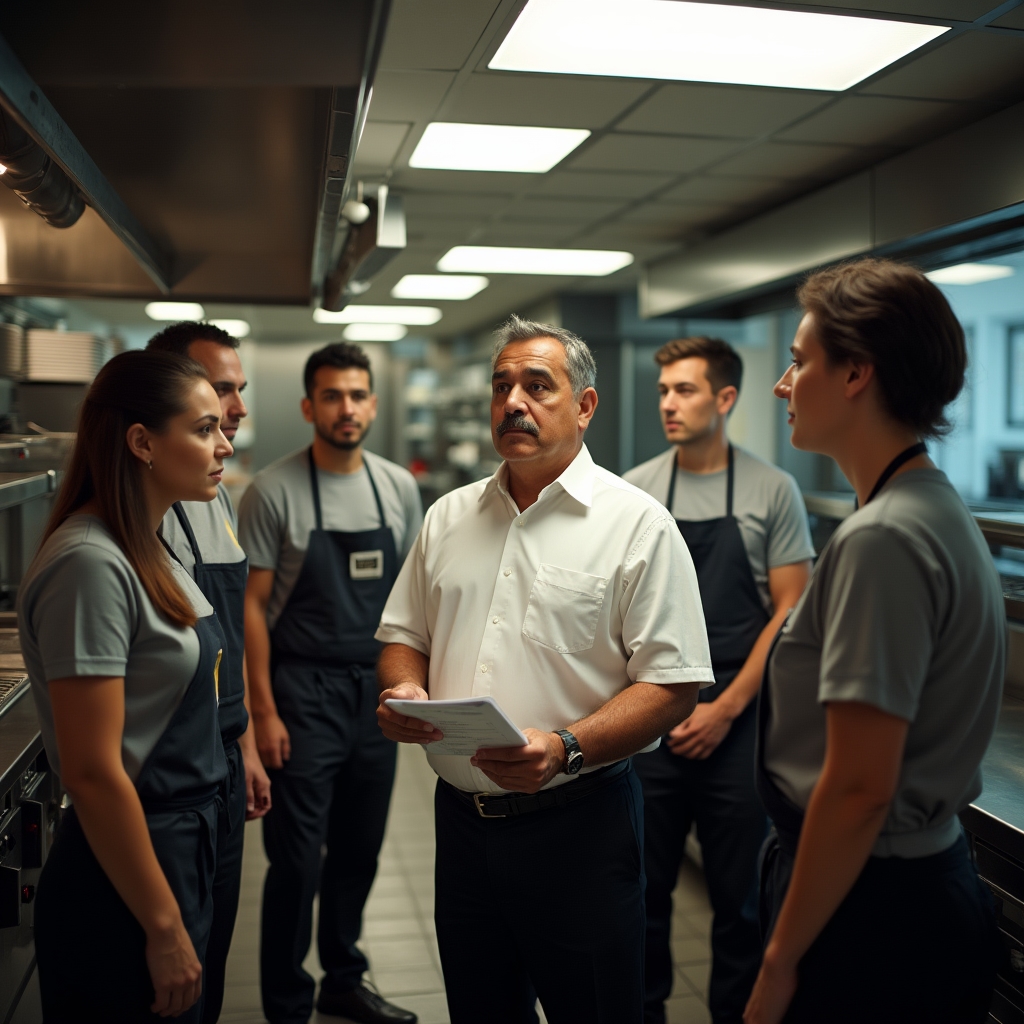
QSR team manager leading a pre-shift briefing with kitchen and counter staff in a quick-service restaurant
Who This Is For

Built for managers who run the floor, not just the numbers.

This program is designed for operations managers and general managers in full-service restaurants, fast-casual concepts, and quick-service chains. It's relevant whether you manage a single high-volume location or oversee a cluster of units.

The content assumes participants are already in the role, making daily scheduling and staffing decisions. It builds on existing operational knowledge rather than starting from fundamentals.

Restaurant GMs Area Managers QSR Operations Leads Multi-unit Supervisors Kitchen Managers
See Upcoming Sessions

Four half-days. Four operational systems. Real tools for your location.

Sessions are available on a rolling enrollment basis. Space per cohort is intentionally kept small.

View Enrollment Details